
A Modern Approach for Better Cancer Control, Continence, and Sexual Function
What is Nerve Sparing Retzius-Sparing Robotic Prostatectomy?
Nerve sparing Retzius-sparing robotic prostatectomy is an advanced minimally invasive prostate cancer surgery that removes the prostate gland while preserving erectile nerves and pelvic support structures. By combining nerve-sparing techniques with a posterior Retzius sparing approach and the hood technique, surgeons aim to improve early urinary continence and recovery of sexual function after robotic prostate surgery.
Prostate cancer is one of the most common cancers affecting men worldwide. Fortunately, advances in surgical technology have significantly improved outcomes for patients undergoing prostate cancer surgery. One of the most important breakthroughs in modern prostate cancer surgery is robotic prostatectomy, particularly techniques that focus on preserving important anatomical structures.
Among these techniques, nerve-sparing Retzius-sparing robotic prostatectomy with the hood technique represents one of the most refined surgical approaches available today. This advanced method aims to remove prostate cancer effectively while reserving urinary continence and sexual function.
In this article, we will explain what robotic prostatectomy is, how the nerve-sparing and Retzius sparing approaches work, and why the hood technique has become an important innovation in prostate cancer surgery.
What is Robotic Prostatectomy?
Robotic prostatectomy, also known as robot-assisted radical prostatectomy, is a minimally invasive surgery used to remove the prostate gland in patients with prostate cancer.
The procedure is performed using a robotic surgical platform that allows the surgeon to operate with:
- High-definition 3D magnified vision
- Precise robotic instruments
- Improved surgical accuracy
- Minimal blood loss
- Faster recovery
Compared with traditional open surgery, robotic prostatectomy offers several advantages:
- Smaller incisions
- Less postoperative pain
- Reduced blood loss
- Shorter hospital stay
- Faster return to daily activities
However, the most important goal of prostate cancer surgery is not only cancer removal but also preserving urinary continence and sexual function, which depend on delicate structures around the prostate.
Understanding the Importance of Nerve Sparing
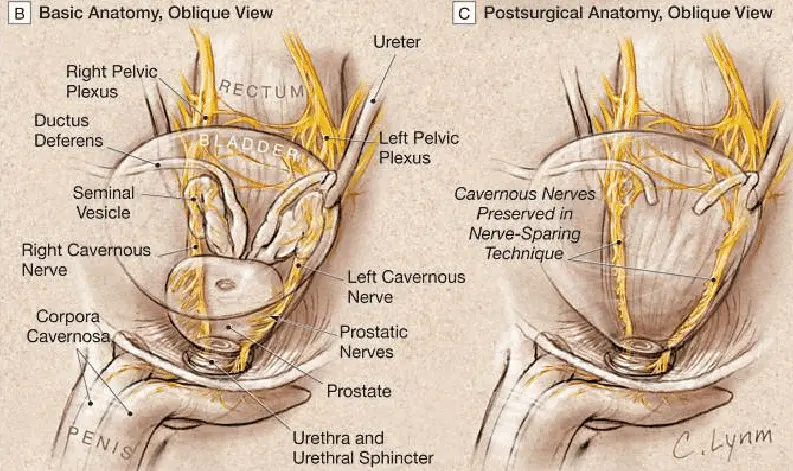
One of the most critical aspects of prostate surgery is protecting the neurovascular bundles, which run along both sides of the prostate. These bundles contain nerves responsible for erections and sexual function.
During traditional prostatectomy, these nerves may be damaged because of their close proximity to the prostate gland. Damage to these nerves can lead to erectile dysfunction after surgery.
This is where nerve-sparing prostatectomy becomes important.
What is Nerve Sparing Prostatectomy?
Nerve-sparing prostatectomy is a surgical technique where the surgeon carefully preserves the neurovascular bundles while removing the prostate gland.
Depending on the location and extent of cancer, surgeons may perform:
- Bilateral nerve sparing – preserving nerves on both sides
- Unilateral nerve sparing – preserving nerves on one side
- Non-nerve sparing – if cancer is very close to the nerves
With modern robotic prostatectomy, surgeons can perform nerve sparing with greater precision due to enhanced visualization and instrument control.
The benefits of nerve-sparing robotic prostatectomy include:
- Better chances of recovering erectile function
- Faster return of sexual function
- Improved overall quality of life after surgery
What is Retzius-Sparing Robotic Prostatectomy?

Traditional robotic prostatectomy involves approaching the prostate from the front (anterior approach) by entering the space of Retzius, which lies between the bladder and the pubic bone.
However, disrupting this space can affect important structures responsible for urinary continence.
Retzius-sparing robotic prostatectomy is a newer surgical approach that avoids entering the space of Retzius.
Instead, the prostate is approached from behind (posterior approach) through the Douglas pouch, allowing the surgeon to remove the prostate while preserving the structures in front of it.
These preserved structures include:
- Puboprostatic ligaments
- Dorsal venous complex
- Endopelvic fascia
- Bladder support structures
Because these structures are preserved, patients often regain urinary continence much faster.
Benefits of Retzius-Sparing Prostatectomy
Several studies have shown that Retzius-sparing robotic prostatectomy can offer significant advantages for patients.
Faster Recovery of Urinary Continence
One of the biggest benefits is early continence recovery.
Many patients undergoing Retzius-sparing surgery are able to regain urinary control within days to weeks, compared with months in traditional approaches.
Better Preservation of Pelvic Anatomy
Because the surgery avoids disrupting the front pelvic structures, the natural support of the bladder and urethra is maintained.
Comparable Cancer Control
Importantly, Retzius-sparing prostatectomy provides similar cancer control outcomes compared with traditional robotic prostatectomy when performed by experienced surgeons.
What is the Hood Technique in Robotic Prostatectomy?

The hood technique is an advanced modification used during nerve-sparing robotic prostatectomy to further preserve the delicate structures around the prostate.
The name “hood” refers to preserving a layer of tissue that covers and protects the neurovascular bundles, similar to a protective hood.
In this technique, the surgeon carefully preserves:
- Anterior fascial layers
- Periprostatic fascia
- Neurovascular bundle covering
By maintaining these layers, the surgeon creates a protective hood around the nerves, minimizing traction or thermal damage.
Advantages of the Hood Technique
When combined with nerve sparing and Retzius sparing, the hood technique can significantly improve functional outcomes after surgery.
Improved Erectile Function Recovery
Because the neurovascular bundles are better protected, patients may experience:
- Faster recovery of erections
- Better long-term sexual function
Enhanced Nerve Preservation
The hood technique reduces the risk of nerve injury caused by traction, heat, or surgical dissection.
Better Anatomical Preservation
Maintaining the natural fascial layers helps preserve the natural anatomy around the prostate.
Combining Techniques: Nerve Sparing + Retzius Sparing + Hood Technique
The combination of these three advanced surgical principles represents one of the most sophisticated forms of robotic prostatectomy available today.
The Goals of This Approach
- Complete removal of prostate cancer
- Maximum preservation of erectile nerves
- Early recovery of urinary continence
- Better overall quality of life
By using nerve-sparing techniques, surgeons aim to protect erectile function.
By using Retzius-sparing surgery, they preserve continence mechanisms.
And by using the hood technique, they further protect the neurovascular bundles.
Together, these methods provide an optimal balance between oncological safety and functional outcomes.
Who is a Candidate for Nerve-Sparing Retzius-Sparing Prostatectomy?
Not every patient with prostate cancer is suitable for these advanced techniques.
Candidates typically include patients who have:
- Localized prostate cancer
- Cancer that is not invading the neurovascular bundles
- Good baseline urinary control
- Reasonable erectile function before surgery
Preoperative evaluation usually includes:
- PSA testing
- MRI of the prostate
- Prostate biopsy
- Clinical staging of the cancer
Your surgeon will determine whether nerve sparing and Retzius sparing are oncologically safe in your particular case.
Recovery After Robotic Prostatectomy
Recovery after robotic prostatectomy is generally faster than traditional surgery.
Typical Recovery Timeline
Hospital stay: 1–2 days
Catheter duration: about 5–7 days
Return to normal activities: 2–3 weeks
Urinary control and erectile function recovery vary from patient to patient.
Factors influencing recovery include:
- Age
- Baseline erectile function
- Extent of nerve sparing
- Surgical expertise
With Retzius-sparing nerve-sparing robotic prostatectomy, many patients experience earlier return of continence and improved functional recovery.
Importance of Surgical Expertise
While these techniques offer significant benefits, outcomes depend heavily on the experience and expertise of the surgeon.
Advanced approaches like Retzius-sparing robotic prostatectomy with the hood technique require:
- Detailed knowledge of pelvic anatomy
- High level of robotic surgical skill
- Significant experience in prostate cancer surgery
Patients should seek treatment from surgeons who specialize in robotic prostatectomy and nerve-sparing techniques.
Conclusion
Modern prostate cancer surgery has evolved dramatically with the introduction of robotic prostatectomy. Techniques such as nerve-sparing prostatectomy, Retzius-sparing surgery, and the hood technique are helping surgeons achieve the dual goals of effective cancer control and preservation of quality of life.
By protecting the neurovascular bundles, preserving pelvic support structures, and maintaining delicate fascial layers, these advanced surgical approaches can significantly improve recovery of urinary continence and sexual function.
For patients diagnosed with localized prostate cancer, nerve-sparing Retzius-sparing robotic prostatectomy with the hood technique represents one of the most sophisticated and patient focused surgical options available today.
A detailed discussion with an experienced robotic prostate surgeon can help determine whether this approach is appropriate for your specific condition.
Frequently Asked Questions
What is nerve sparing robotic prostatectomy?
Nerve sparing robotic prostatectomy is a surgical technique used during robotic prostate cancer surgery to preserve the neurovascular bundles responsible for erections. By carefully protecting these nerves, surgeons aim to improve recovery of sexual function after prostate cancer surgery.
What is Retzius-sparing robotic prostatectomy?
Retzius-sparing robotic prostatectomy is a posterior surgical approach that removes the prostate without entering the space of Retzius. This technique preserves pelvic support structures and can lead to faster recovery of urinary continence after prostate cancer surgery.
What is the hood technique in robotic prostatectomy?
The hood technique involves preserving the fascial layers covering the neurovascular bundles during robotic prostatectomy. This protective “hood” helps minimize nerve damage and may improve recovery of erectile function after surgery.
Is robotic prostatectomy better than open surgery?
Yes, robotic prostatectomy offers several advantages over open prostate surgery, including smaller incisions, less blood loss, faster recovery, and better visualization for nerve-sparing surgery.
How long does recovery take after robotic prostatectomy?
Most patients stay in the hospital 1–2 days after robotic prostatectomy. The urinary catheter is usually removed within 5–7 days, and most patients return to normal activities within 2–3 weeks.
Who is suitable for nerve sparing prostatectomy?
Patients with localized prostate cancer where the tumor is not invading the neurovascular bundles may be suitable for nerve sparing prostatectomy. MRI and biopsy results help determine eligibility